
30.04.2026
On the 2.0 TDI platform, especially on the VW Passat B7 equipped with Bosch EDC17C54 ECU, engine management integrates structured strategies related to torque control, limiters, and vehicle operating conditions.
This means that specific and “dramatic” modifications such as Hardcut and Launch Control do not require the introduction of external logic, but can be implemented by working directly on maps already present in the ECU.
Thanks to ECM Titanium and the dedicated Driver for this application, it is possible to clearly access the involved parameters and build a precise, repeatable intervention fully integrated with the original ECU logic.
How is the modification carried out?
To carry out the intervention on the ECU, management is handled through the map:
This map limits torque based on:
- vehicle speed (km/h/RPM ratio)
- engine speed
By working on this relationship, it is possible to differentiate behavior between:
- stationary vehicle → Launch Control
- moving vehicle → Hardcut
Practical example: VW Passat B7
In this case, we focus on one of the most widespread models in the VW 2.0 TDI range with Bosch EDC17C54 ECU.
The final result (shared across other applications) is determined by the combination of multiple parameters, based on engine speed, vehicle speed, and operating conditions, which work together to regulate engine behavior according to customer requirements.
The intervention is developed on three levels.
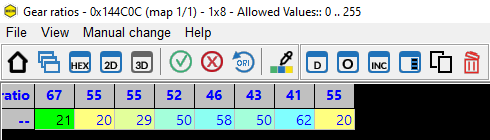
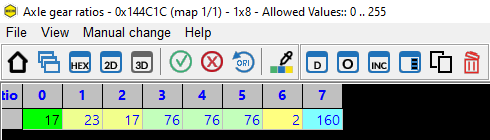
1. Speed axis management
The speed axis (km/h/RPM) must be reduced to:
- avoid unwanted limitations during driving
- ensure a clear separation between stationary and moving states
This step is essential to make the intervention logic stable and predictable.
2. Cut-off RPM definition
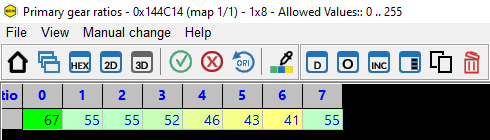
The engine speed axis must be configured with closely spaced steps around the intervention thresholds.
Values used:
- Launch Control: 3940 – 4000 RPM
- Hardcut: 4450 – 4500 RPM
The density of points in these areas allows for a sharp and responsive cut, generating the characteristic effect.
3. Torque management
Within the table, torque values must be set to zero at the intervention points.
- First row (vehicle stationary):
- zeroing from 4000 RPM onwards
- Subsequent rows (vehicle moving):
- zeroing from 4500 RPM onwards
In this way, an active limiter is achieved when stationary for launch control, and a sharp cut while driving to generate the hardcut.

What are the advantages of this type of intervention?
This type of work allows you to offer a customized service in a simple and direct way, based on existing ECU logic, without introducing external strategies.

Alientech Academy
Do you want to improve even more in what you do?
Take a look at our training programs worldwide. Invest in your skills and increase your earning potential. A specialist will be with you every step of the way, so you can start working confidently right away!